VAT Inclusive vs VAT Exclusive Explained (UK Guide for Beginners)
Many people get confused when they see VAT inclusive and VAT exclusive prices. Both appear in the UK every day. You see them on invoices, quotes, and shop labels. If you run a business, this difference matters a lot. A small mistake in VAT can change the total price.
Some prices already include VAT. Other prices require VAT to be added later. If you do not know the difference, it is easy to make errors when calculating totals. This guide explains VAT inclusive vs VAT exclusive in clear and simple words.
You will also learn how to calculate both types with real examples.
If you want to quickly calculate VAT or remove VAT from a price, you can use this
free VAT calculator tool. It helps you calculate VAT in seconds.
What Does VAT Inclusive Mean?
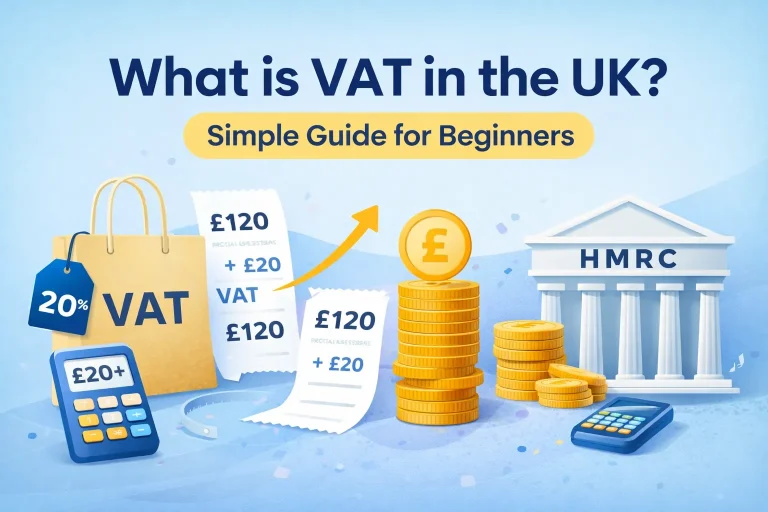
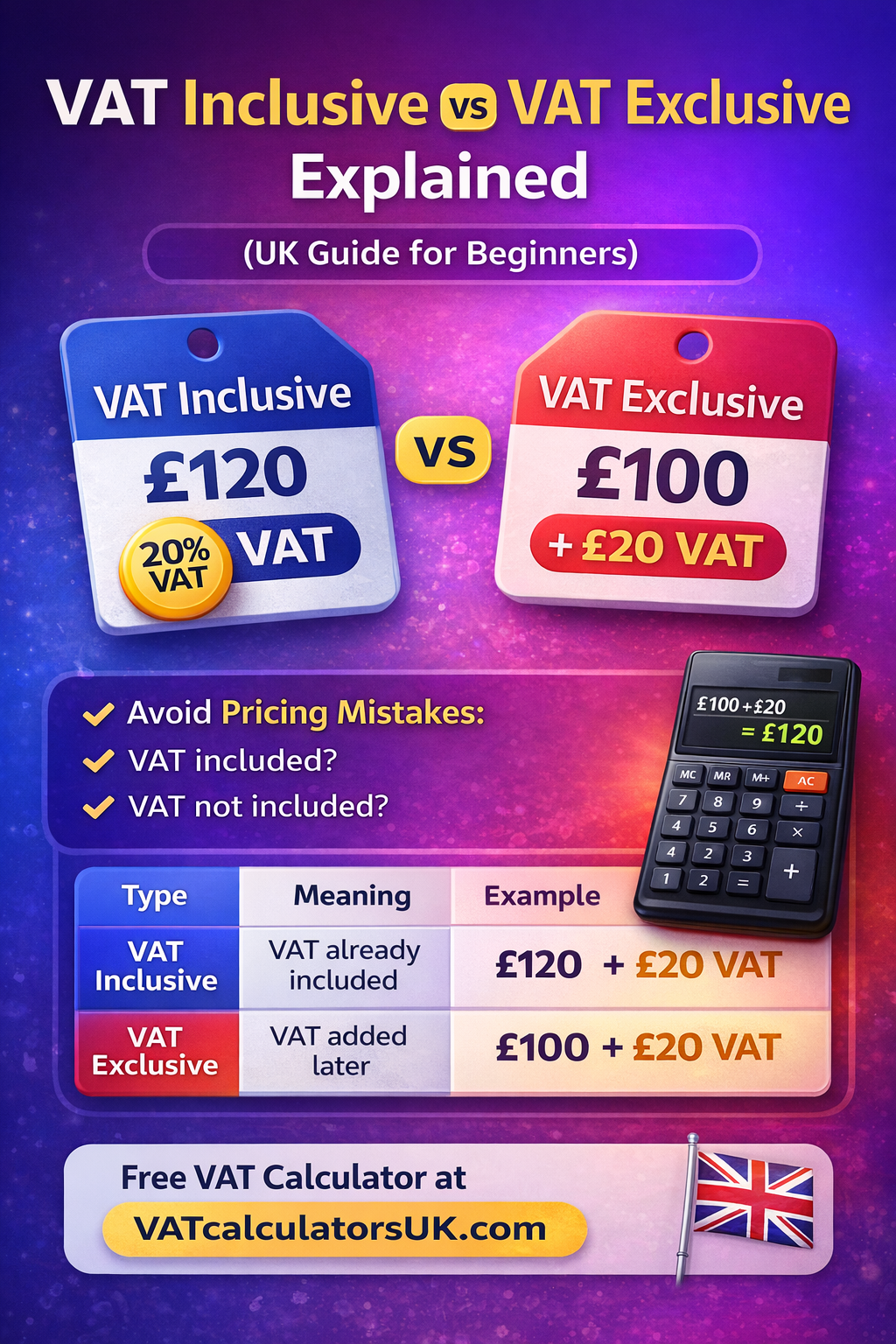
A VAT inclusive price means the tax is already included in the total price. This means the number you see already contains VAT. The VAT amount is hidden inside the final price.
Simple Example
Imagine you buy a product for £120 VAT inclusive. This means VAT has already been added.
Inside that £120 price there are two parts:
- the original price
- the VAT amount
So the £120 already includes both.
To find the original price, you must remove VAT from the total.
Formula for VAT Inclusive Prices
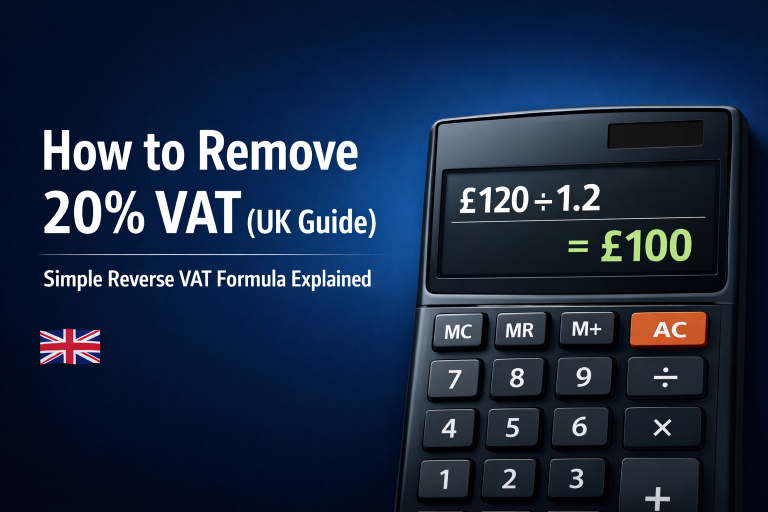
To remove VAT from a price, use this formula: Net Price = VAT Inclusive Price ÷ 1.20 This works when the VAT rate is 20%, which is the standard UK VAT rate.
Example Calculation
VAT inclusive price = £120
Step 1
Divide by 1.20
£120 ÷ 1.20 = £100
Step 2
Find the VAT amount
£120 − £100 = £20 VAT
So the breakdown looks like this:
| Item | Amount |
|---|---|
| Net Price | £100 |
| VAT | £20 |
| Total | £120 |
This method is often called a reverse VAT calculation. It helps you find the original price hidden inside a VAT inclusive amount. Many accountants use this method when checking receipts or expenses.
What Does VAT Exclusive Mean?
A VAT exclusive price means VAT has not yet been added. The price you see is only the base price. You must calculate VAT and add it to get the final total. This type of pricing is very common in business invoices.
Example
Product price = £100 (VAT exclusive)
Now calculate VAT.
£100 × 20% = £20 VAT
Then add VAT to the original price.
£100 + £20 = £120
So the final price becomes £120 including VAT. This is the method many UK businesses use when creating invoices.
VAT Inclusive vs VAT Exclusive (Quick Comparison)
Here is a simple comparison table.
| Price Type | Meaning | Example |
|---|---|---|
| VAT Inclusive | VAT already included | £120 |
| VAT Exclusive | VAT added later | £100 + £20 VAT |
The final price may be the same. But the way VAT is calculated is different. Understanding this difference helps avoid confusion in invoices and payments.
Why Businesses Use VAT Exclusive Prices
Most businesses prefer VAT exclusive pricing. This is common in B2B transactions. B2B means business-to-business sales. There are several reasons businesses use this pricing method.
Clear Accounting
It is easier to record income and tax separately.
Transparent Invoices
The invoice clearly shows:
- product price
- VAT amount
- final total
Easier Tax Reporting
Businesses must report VAT to HMRC. Showing VAT separately helps during tax filing.
Better Financial Tracking
Companies can easily see how much tax they collected. This helps with financial planning. Because of these reasons, most professional invoices list prices without VAT first, then add VAT below.
Why Retail Stores Use VAT Inclusive Pricing
Retail shops usually display VAT inclusive prices. Customers prefer seeing the final price immediately. They do not want to calculate tax in their head.
Example
A supermarket label shows:
£2.40
That price already includes VAT.
The customer pays exactly £2.40 at checkout.
There is no extra tax added later. This makes shopping simpler. Most UK consumer prices follow this rule.
How to Identify VAT Inclusive Prices
You can usually recognise VAT inclusive prices by checking the label or invoice.
Look for phrases like:
- inc VAT
- price includes VAT
- VAT included
Sometimes invoices also show a VAT breakdown below the price. This confirms the total already includes VAT. Always check the invoice carefully when buying from suppliers. A small misunderstanding can change the payment amount.
When VAT Exclusive Pricing Is Used
VAT exclusive pricing appears mostly in business situations.
You will often see it in:
- B2B invoices
- contractor quotes
- supplier price lists
- consulting services
- wholesale pricing
In these cases, the listed price does not include VAT. VAT is calculated later when the final invoice is created. This keeps business accounts cleaner and easier to manage.
Common VAT Calculation Mistakes
Many businesses make simple mistakes when calculating VAT. These errors usually happen when people confuse inclusive and exclusive prices. Here are some common mistakes.
Adding VAT Twice
Some people add VAT again to a price that already includes VAT. This increases the total incorrectly.
Mixing Inclusive and Exclusive Prices
People sometimes treat VAT inclusive prices as VAT exclusive. This causes incorrect totals.
Forgetting to Add VAT
Some invoices accidentally leave VAT out. This leads to accounting problems later.
Incorrect VAT Formula
Using the wrong formula is another common issue. VAT inclusive prices require division. VAT exclusive prices require multiplication.
Using the wrong method creates wrong totals. To avoid these mistakes, many businesses use online calculators. You can use the free VAT calculator at: Vat Calculator It helps calculate VAT instantly.
How a VAT Calculator Helps
Manual calculations work, but they can take time. A VAT calculator simplifies the process. You just enter the price and choose the action.
For example:
- add VAT
- remove VAT
- calculate VAT amount
The tool instantly shows:
- net price
- VAT amount
- total price
This saves time and reduces mistakes. Many accountants and freelancers use VAT calculators daily.
Real-World Example
Let’s look at a real situation. A freelance designer charges £500 for a project. If the price is VAT exclusive, the invoice will look like this:
| Item | Amount |
|---|---|
| Service Fee | £500 |
| VAT (20%) | £100 |
| Total | £600 |
But if the price was VAT inclusive, the total would already be £600. The designer would need to remove VAT to find the original value.
£600 ÷ 1.20 = £500
VAT = £100
The numbers are the same. But the method used is different.
Why Understanding VAT Pricing Matters
Knowing the difference between VAT inclusive vs VAT exclusive is very important.
It helps you:
- calculate VAT correctly
- understand invoices clearly
- avoid tax mistakes
- manage business finances better
- prepare accurate accounts
It also helps ensure your business follows UK VAT rules. Incorrect VAT calculations can create problems with HMRC. Learning these basics early saves time and stress later.
Final Thoughts
Understanding VAT inclusive vs VAT exclusive pricing is essential for anyone working with prices, invoices, or business accounts in the UK. VAT inclusive prices already contain tax. VAT exclusive prices require VAT to be added. Once you understand the formulas, VAT calculations become simple.
Businesses should always label prices clearly. This helps customers and clients know if VAT is included. If you want a fast way to calculate VAT amounts, you can use the free VAT calculator at: https://vatcalculatorsuk.com/ It helps you add VAT, remove VAT, and check totals quickly.