VAT Zero-Rated vs VAT Exempt in the UK – Simple Guide for Beginners
Many people think that zero-rated and VAT exempt goods are the same, but in reality, both have different meanings and tax rules in the UK.
This confusion often creates problems for beginners, especially when they try to apply the correct VAT rule while selling products or managing invoices.
That is why understanding VAT zero-rated vs VAT exempt UK becomes very important for business owners, freelancers, and anyone dealing with VAT regularly.
In this guide, both concepts will be explained in a simple way so that correct VAT treatment can be applied without confusion.
What is VAT Zero-Rated in the UK
VAT zero-rated goods are items that are still taxable, but the VAT rate applied to them is 0%, which means no tax is charged.
Even though VAT is charged at 0%, these goods are still part of the VAT system, and businesses must record them in their VAT returns.
For example, most basic food items, children’s clothing, and books fall under zero-rated VAT in the UK.
This concept becomes easier to understand when basic VAT knowledge is clear, which is explained in your guide on What is VAT in the UK, where the foundation of VAT is explained simply.
What is VAT Exempt in the UK
VAT exempt goods and services are completely outside the VAT system, which means VAT is not charged and cannot be reclaimed.
Businesses that deal only with exempt items usually do not register for VAT, depending on their situation and income.
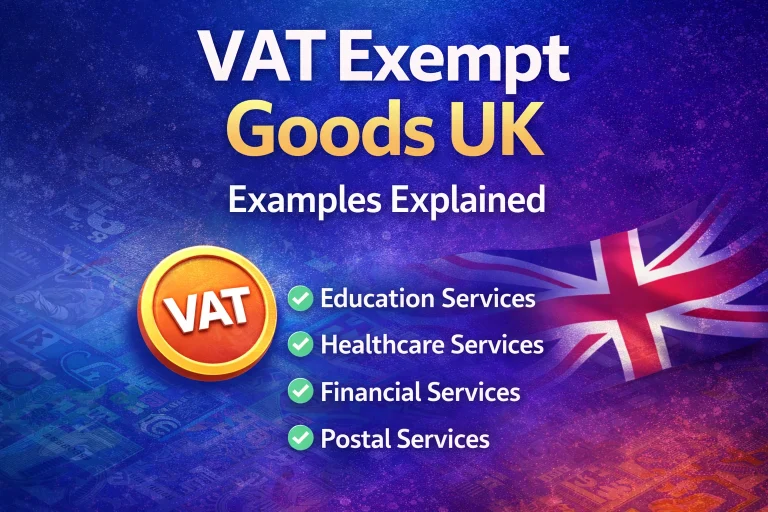
Examples of VAT exempt services include financial services, education, and certain healthcare services in the UK.
This topic is closely related to your article on What Goods Are Exempt from VAT in the UK, where detailed examples are explained clearly.
Key Difference Between Zero-Rated and VAT Exempt
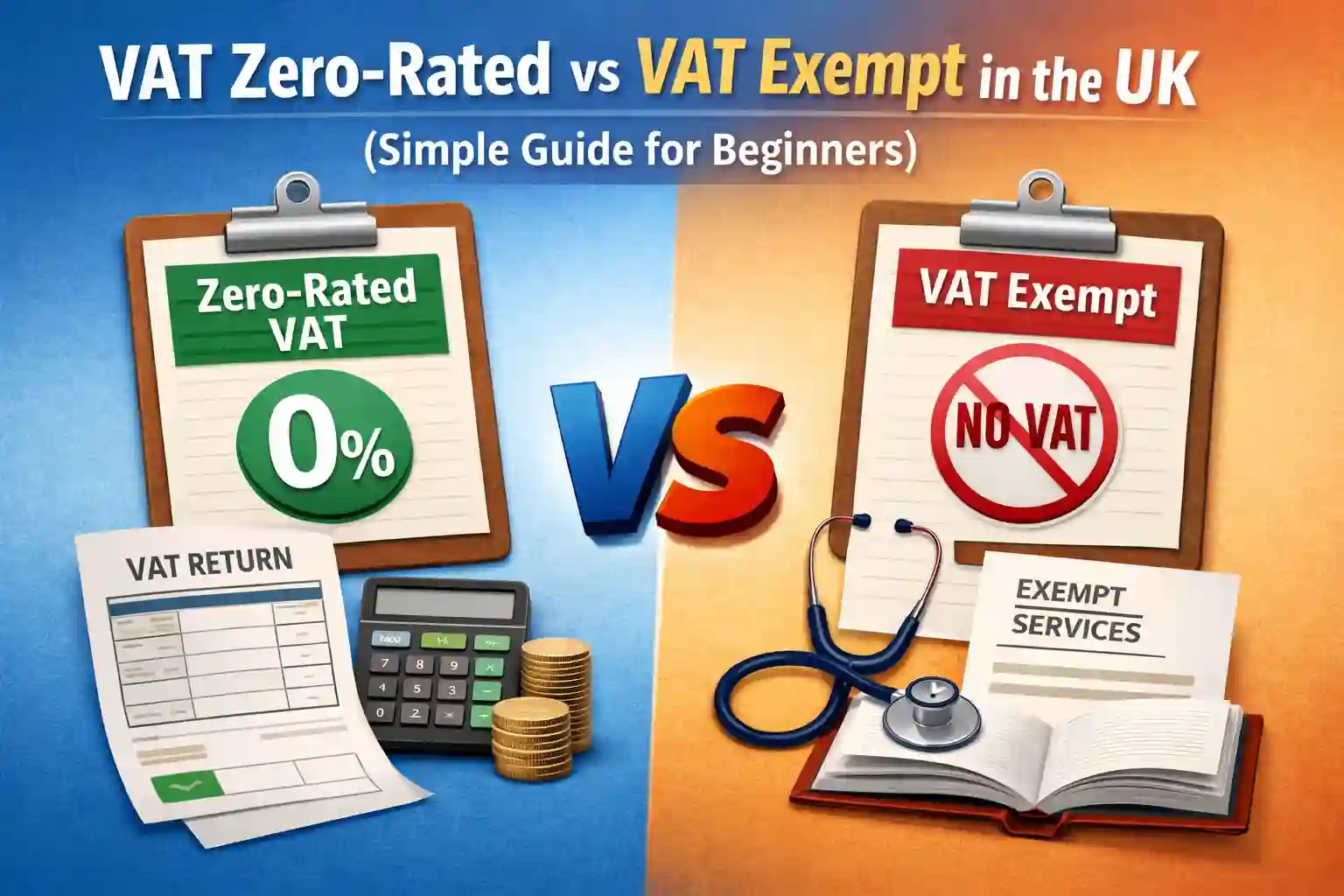
The main difference between zero-rated and VAT exempt goods is how they are treated within the VAT system.
| Feature | Zero-Rated VAT | VAT Exempt |
| VAT Rate | 0% | No VAT |
| VAT Return Required | Yes | No |
| VAT Reclaim Allowed | Yes | No |
Understanding this difference is very important because it affects whether VAT can be reclaimed or reported during tax submissions.
Why People Get Confused Between These Two
Many people assume that both zero-rated and VAT exempt mean the same thing because no VAT is charged in both cases.
However, the key difference lies in whether the goods are part of the VAT system or completely outside of it.
This confusion often leads to mistakes when using a VAT Calculator UK, because incorrect VAT type selection can result in wrong calculations.
How VAT is Applied in Both Cases
In zero-rated goods, VAT is technically applied at 0%, which means it is still recorded and reported in VAT returns.
In exempt goods, VAT is not applied at all, and these transactions are not included in VAT calculations.
This difference becomes important when working with invoices and pricing structures in real business situations.
Simple Example to Understand the Difference
Let’s understand this with a simple example so that the difference becomes clear and easy to apply in real situations.
If a business sells books, those sales are zero-rated, which means VAT is recorded but charged at 0%.
If a business provides financial services, those services are exempt, which means VAT is not charged or reported.
Connection with Other VAT Concepts
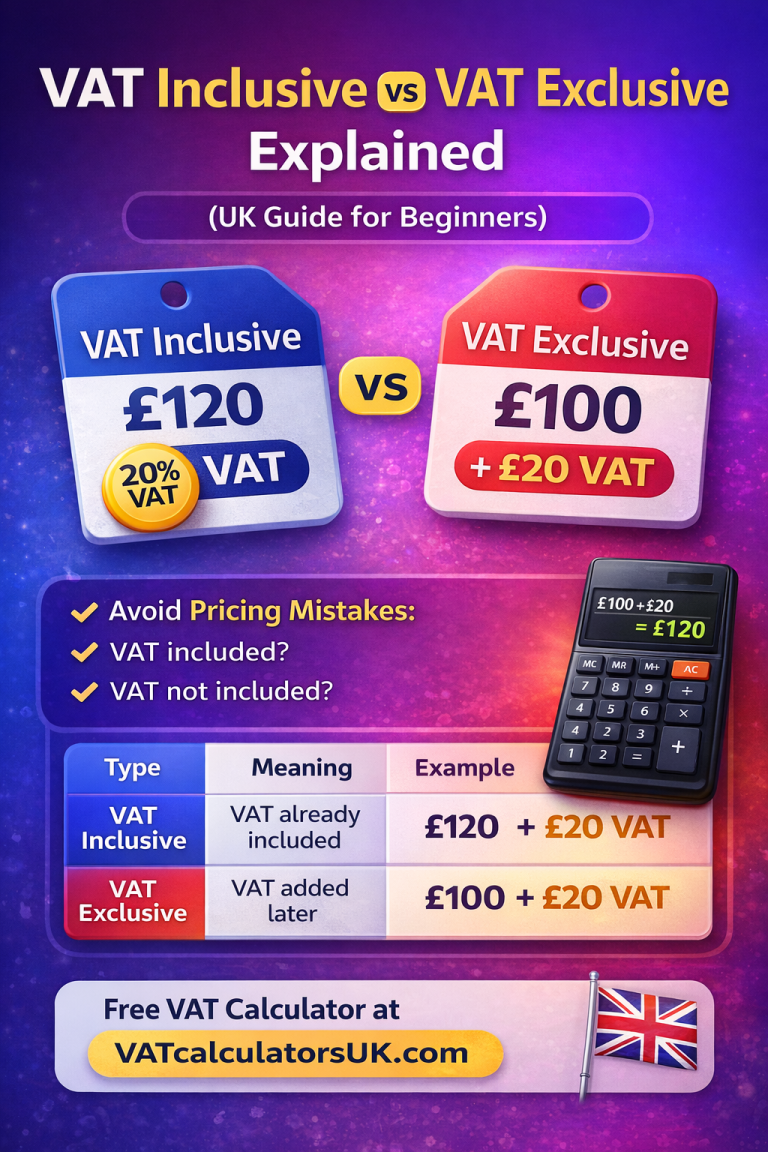
Understanding VAT zero-rated vs VAT exempt UK also helps in learning other important VAT topics like inclusive and exclusive pricing.
For example, VAT-inclusive pricing only applies where VAT exists, while exempt goods do not follow the same structure.
This concept is explained further in your guide on
VAT Inclusive vs VAT Exclusive, which helps connect different VAT concepts together.
Can You Reclaim VAT on Zero-Rated and Exempt Goods
One of the most important differences in VAT zero-rated vs VAT exempt UK is whether VAT can be reclaimed on business expenses.
In zero-rated goods, VAT is charged at 0%, but businesses can still reclaim VAT on related purchases and expenses.
In VAT exempt goods, VAT cannot be reclaimed because these goods are completely outside the VAT system.
This difference becomes very important for businesses when calculating profit margins and managing expenses correctly in daily operations.
How This Affects Businesses and Freelancers
Understanding VAT zero-rated vs VAT exempt UK is very important for businesses and freelancers because it directly affects pricing, tax reporting, and overall financial planning.
For example, businesses dealing with zero-rated goods must still file VAT returns, even though no VAT is charged to customers.
On the other hand, businesses dealing only with exempt goods may not need to register for VAT, depending on their turnover.
This concept becomes clearer when connected with your guide on work out VAT backwards in the UK, where practical calculation examples are explained.
When to Use Zero-Rated vs Exempt Classification
Choosing the correct VAT category is very important because using the wrong classification can lead to financial errors and tax issues.
If a product falls under zero-rated VAT, it must still be included in VAT returns even though no tax is charged.
If a service is exempt, then VAT is not applied, and it should not be included in VAT calculations or returns.
This is why understanding VAT zero-rated vs VAT exempt UK helps avoid mistakes when using tools like VAT Calculator Guide, where correct input selection is required.
Common Mistakes to Avoid
Many beginners make mistakes when they assume that zero-rated and VAT exempt goods are the same, which leads to incorrect tax handling.
Another common mistake is trying to reclaim VAT on exempt goods, which is not allowed and can create compliance issues.
Some users also apply VAT incorrectly while calculating totals, especially when they do not understand the difference between these categories.
These mistakes can be avoided by clearly understanding the rules and applying them correctly in every transaction.
How This Topic Connects with Other VAT Concepts
The concept of VAT zero-rated vs VAT exempt UK is closely connected with other important VAT topics that are already covered on your website.
For example, VAT calculator depends on whether a product is taxable, zero-rated, or exempt, which affects how totals are calculated.
This also connects with your article on Online VAT Calculator UK, where VAT is added or removed based on correct classification.
Understanding these connections helps users build a complete understanding of VAT instead of learning topics separately.
Final Thoughts
Understanding VAT zero-rated vs VAT exempt UK is very important because it helps in applying correct VAT rules in both personal and business situations.
By learning the difference clearly, mistakes can be avoided, and accurate VAT calculations can be done without confusion.
With the help of your existing guides and tools, users can easily understand and apply VAT rules in real-life scenarios.