How to Register for VAT UK Step-by-Step Guide 2026 for Beginners
If your business is growing and your sales are increasing, VAT registration can feel like a big step that brings both new responsibilities and important opportunities for your business.
Many business owners feel confused when they hear about VAT registration UK for the first time because the rules can feel difficult to understand in the beginning. It sounds complex at first, but once you understand the steps clearly, the process becomes much easier to manage.
Registering for VAT in the UK is an important step for many businesses because it allows you to charge VAT legally and stay compliant with HMRC rules. In this complete guide, you will learn exactly when to register, what documents you need, and how to finish the process without mistakes.
What is VAT Registration in the UK
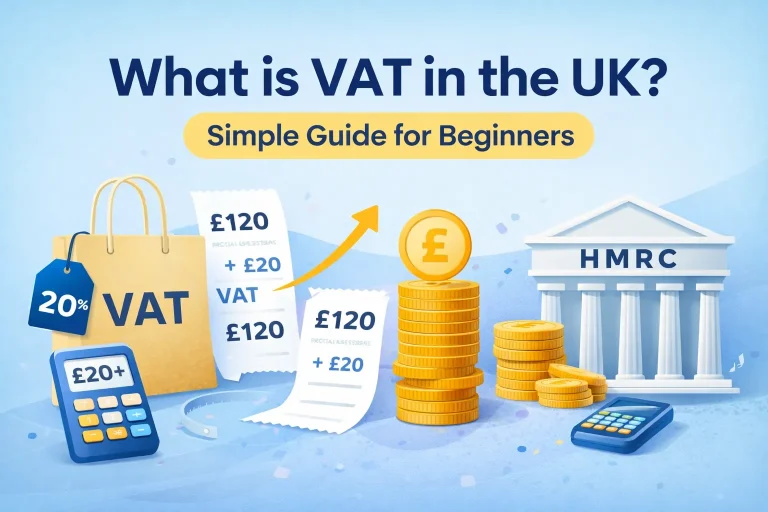
VAT registration means informing HMRC that your business has reached the required sales level and must start charging VAT on goods or services. Once registered, your business receives a VAT number, which allows you to collect VAT from customers and pay it to HMRC.
For many businesses, VAT registration becomes necessary when sales grow and the business crosses the VAT registration threshold set by HMRC. At this point, the business must follow VAT rules carefully and record all VAT transactions properly to avoid errors during reporting.
A registered business must also submit VAT returns regularly, which means reporting how much VAT was charged and how much VAT was paid on expenses. Many businesses use a VAT Calculator to check amounts before submitting returns because it reduces errors and saves time.
When Do You Need to Register for VAT
Not every business needs to register for VAT immediately because registration depends on your yearly turnover. Turnover means the total value of sales made by your business over a specific period, usually calculated across a rolling 12-month timeframe.
You must register for VAT if your taxable turnover goes above the official VAT registration threshold set by HMRC. If your turnover stays below this limit, registration is usually optional, but some businesses still register voluntarily to prepare for future growth.
Businesses often choose voluntary registration because it allows them to claim VAT back on expenses and appear more professional when dealing with larger companies. Still, the decision should always match the business size, expected turnover, and future plans.
VAT Registration Requirement Table
| Situation | Do You Need to Register for VAT |
|---|---|
| Turnover above threshold | Yes, registration required |
| Turnover below threshold | Optional registration |
| Expecting to exceed threshold soon | Recommended to register |
| Voluntary registration | Allowed anytime |
VAT Registration Threshold UK 2026
The VAT threshold is the level of turnover at which businesses must register for VAT because reaching this level means the business is legally required to start charging VAT. This amount is reviewed regularly, and staying updated with current figures helps businesses avoid late registration penalties.
Below is a simple table showing the expected threshold figures used in recent years so that businesses can understand how the VAT registration threshold has changed over time.
VAT Registration Threshold UK Table
| Year | VAT Registration Threshold |
|---|---|
| 2023 | £85,000 |
| 2024 | £85,000 |
| 2025 | £90,000 |
| 2026 | £90,000 |
This table helps business owners understand when VAT registration becomes necessary and how quickly they need to take action after reaching the threshold. If your business turnover crosses the threshold within a 12-month period, you must register within the required time frame set by HMRC.
Many business owners track their turnover monthly and use a VAT Calculator to estimate tax amounts as sales grow over time. This habit helps avoid unexpected surprises and keeps financial planning under control as the business continues to expand.
Benefits of Registering for VAT
Some business owners feel worried about VAT registration because they think it will increase their workload and create more responsibility in daily operations. While VAT does require proper record keeping, it also provides several useful benefits that support the long-term growth of many businesses.
One major benefit is the ability to reclaim VAT on purchases related to business activities, which helps reduce overall costs and improves cash flow over time. This includes equipment, supplies, and professional services that support your daily operations and business expansion.
Another benefit is improved business credibility because registered businesses often look more established in the eyes of clients and suppliers who prefer working with reliable companies. Many large companies prefer working with VAT-registered businesses because it shows reliability and compliance with business standards.
VAT registration also allows better financial tracking because it encourages accurate record keeping and regular reviews of sales performance across different periods. Over time, this habit helps businesses understand growth patterns, control spending, and manage expenses more efficiently.
Benefits of VAT Registration Table
| Benefit | How It Helps Businesses |
|---|---|
| Reclaim VAT | Reduces business expenses |
| Business credibility | Builds trust with clients |
| Better financial tracking | Improves decision making |
| Professional image | Attracts larger companies |
Documents Needed for VAT Registration
Before starting the registration process, it is important to gather the correct documents because missing information can delay approval and create unnecessary problems during submission. HMRC requires several details to confirm your business identity and activity before issuing a VAT number.
Below is a table showing the most common documents required during VAT registration so that businesses can prepare everything in advance and avoid delays.
Required Documents Table
| Document | Purpose |
|---|---|
| Business name | Identifies the registered company |
| Business address | Confirms operating location |
| Bank account details | Used for VAT payments and refunds |
| National Insurance number | Verifies business owner identity |
| Company registration number | Required for limited companies |
| Turnover details | Shows total taxable sales |
Having these documents ready makes the registration process smoother and reduces the chances of delays during approval. Many businesses prepare a checklist before applying to ensure every detail is available and correctly recorded.
Step by Step VAT Registration Process UK
Now that you understand the basics of VAT registration, the next step is learning how the registration process works from start to finish in the correct order. Following a structured approach helps reduce confusion and prevents costly mistakes that could delay your VAT approval.
This section explains each step clearly in the order you should complete them so that you can follow the process with confidence and avoid missing any important details.
Step 1: Create an HMRC Online Account
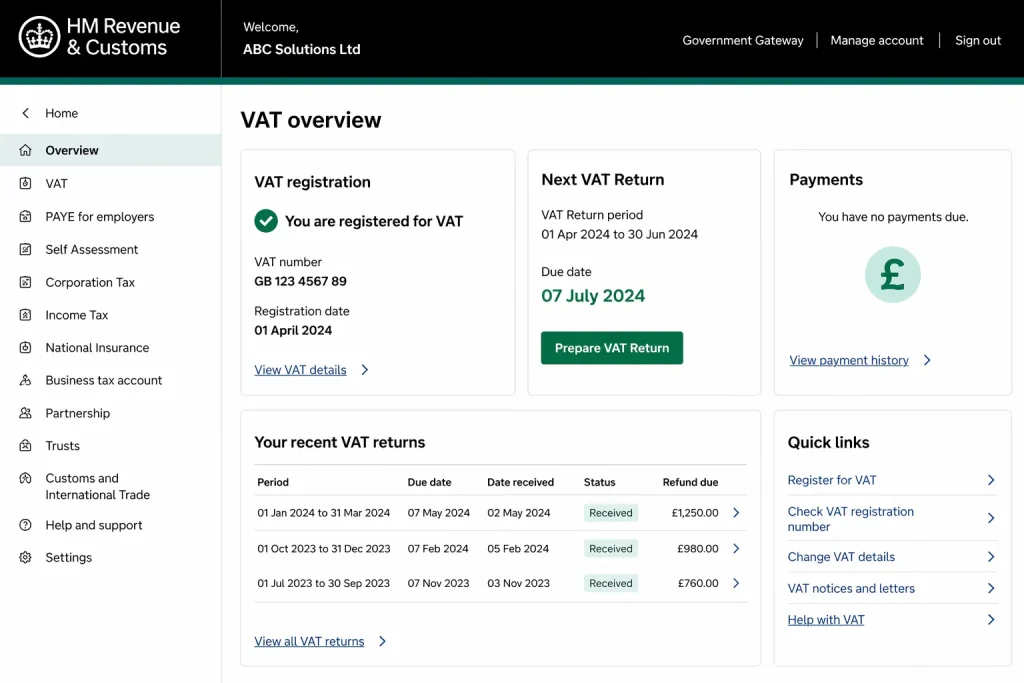
The first step in registering for VAT is creating an account on the HMRC online services portal because this account allows you to access VAT registration tools and submit information securely. Having an online account makes the registration process easier to manage from the beginning.
You will need to provide basic details such as your email address and create a password to protect your account from unauthorized access. After creating the account, HMRC sends a verification code to confirm your identity and activate your login access.
Once your account is active, you can access VAT registration services and begin the official application process without delays. This online system makes the process faster and reduces paperwork compared to older methods that required manual submission.
Step 2: Provide Business Details
After logging into your HMRC account, you will be asked to enter detailed information about your business so that HMRC can clearly understand the structure and activities of your company. This step helps ensure that your registration details match your business records from the beginning.
You will need to enter your business name, address, and contact details along with the type of business you operate, such as a sole trader, partnership, or limited company. If your business is a limited company, you must also provide your company registration number as part of the verification process.
Accuracy is extremely important during this step because incorrect information can delay your VAT approval and create additional checks from HMRC. Many business owners review their entries twice before moving to the next stage to make sure all details are correct.
Step 3: Enter Turnover Information
The next step involves entering your business turnover details because HMRC uses this information to determine your eligibility for VAT registration and confirm whether your business has reached the required threshold. Turnover includes all taxable sales made within a rolling 12-month period, which helps HMRC review your business activity accurately.
You must provide estimated sales figures if your business has recently crossed the VAT threshold or expects to cross it soon based on current sales growth. This helps HMRC confirm whether registration is mandatory or voluntary and ensures that your application is processed correctly.
Some businesses use a VAT Calculator during this stage to estimate VAT amounts based on expected sales and planned pricing. This practice allows better financial planning and helps businesses prepare for future VAT payments without unexpected surprises.
Step 4: Choose the Correct VAT Registration Date
After entering your turnover details, the next step involves selecting your VAT registration date because this date decides when you must begin charging VAT on sales and issuing VAT invoices to customers. Many business owners feel unsure about this step, but understanding the logic behind it makes the decision easier and helps prevent future mistakes.
If your business crossed the VAT registration threshold, your registration date is usually based on the end of the month when your turnover exceeded the limit during a rolling 12-month period. This rule ensures that businesses start charging VAT at the correct time and avoid penalties caused by late registration.
In some cases, businesses apply for voluntary registration even before reaching the threshold because they want to claim VAT on expenses and prepare their systems in advance. Choosing the right date helps avoid confusion when preparing invoices and calculating VAT amounts correctly in later stages.
VAT Registration Date Example Table
| Situation | Registration Date Rule |
|---|---|
| Threshold exceeded | End of the month when limit crossed |
| Voluntary registration | Date chosen by business |
| Late registration | HMRC may apply penalties |
Step 5: Select the Correct VAT Scheme
During VAT registration, HMRC asks you to choose a VAT accounting scheme because different schemes suit different types of businesses depending on their size and financial activity. Selecting the right scheme helps reduce workload, improves financial planning, and makes VAT reporting easier to manage.
Many new businesses select the standard VAT accounting scheme because it follows simple rules and works well for most companies with steady sales. Other businesses may choose special schemes depending on their size, cash flow needs, and the way they manage payments from customers.
Below is a table explaining the most common VAT schemes used in the UK so that businesses can compare the available options and select the most suitable scheme.
VAT Schemes Table
| VAT Scheme | Who Should Use It | Key Benefit |
|---|---|---|
| Standard VAT Scheme | Most businesses | Simple and widely used |
| Flat Rate Scheme | Small businesses | Reduces record keeping |
| Cash Accounting Scheme | Businesses with slow payments | Pay VAT only when paid |
| Annual Accounting Scheme | Stable businesses | Submit one VAT return per year |
Choosing the correct scheme is important because changing schemes later can require additional paperwork and adjustments that take extra time and effort. Many businesses review their expected income and expenses carefully before making a final decision about which VAT scheme to select.
Step 6: Submit Your VAT Registration Application
Once all required details are entered, the next step is submitting your VAT registration application through the HMRC online portal so that your registration request can be officially recorded. This stage marks the official completion of your registration request and sends your application for review.
Before submitting the form, it is important to review all entered information carefully because small mistakes can delay approval or cause confusion during processing. Many business owners take a few minutes to double-check details such as turnover figures, contact information, and business details before clicking the submit button.
After submission, HMRC processes the application and reviews the provided data carefully to confirm that all information matches their requirements. During this period, businesses should keep records ready in case additional information or supporting documents are requested by HMRC.
How Long Does VAT Registration Take UK
One of the most common questions asked by new business owners is how long VAT registration takes after submitting the application because waiting for approval can affect business planning. Understanding the typical timeline helps reduce stress and allows better preparation for the next steps.
In most cases, VAT registration takes between two to four weeks, but processing time may vary depending on the accuracy of information submitted and the workload at HMRC during busy periods. If all details are correct and complete, the process usually finishes without delays or additional checks.
Below is a simple timeline showing what happens after submitting your VAT registration so that businesses can understand each stage of the approval process.
VAT Registration Timeline Table
| Stage | Estimated Time |
|---|---|
| Application submission | Same day |
| HMRC review process | 2–4 weeks |
| VAT number issued | After approval |
| Confirmation letter received | Within 7 days |
During this waiting period, businesses should prepare their accounting systems and invoicing tools because VAT charging begins from the official registration date provided by HMRC. Preparing these systems early helps avoid delays when issuing invoices and collecting VAT from customers.
Step 7: Receive Your VAT Number UK
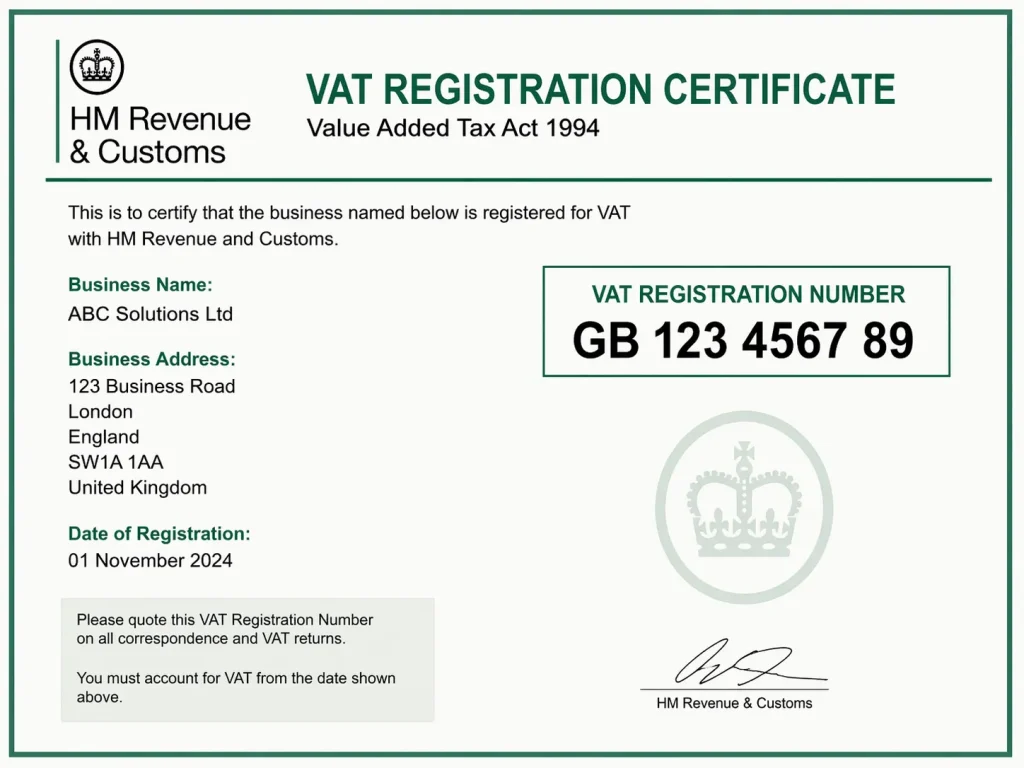
After HMRC approves your application, your business receives a VAT number which confirms that your company is officially registered for VAT. This number is unique to your business and must appear on invoices, VAT returns, and other official documents.
Receiving a VAT number marks an important milestone because it allows your business to collect VAT legally from customers and record VAT transactions correctly. Many companies update their invoice templates immediately after receiving this number to ensure compliance with VAT rules.
Keeping the VAT number safe and easily accessible is important because it will be required whenever you submit VAT returns, issue invoices, or communicate with HMRC about your VAT records.
What Happens After VAT Registration
Many business owners think that registration is the final step, but the real responsibility begins after receiving the VAT number because businesses must follow proper VAT rules and maintain accurate records for every transaction. Understanding these responsibilities early helps prevent mistakes and keeps your business compliant with HMRC requirements.
After registration, your business must start charging VAT on all taxable sales from the official registration date assigned by HMRC. This includes updating invoices, accounting systems, and pricing structures so that VAT charges are included correctly on every sale.
Businesses must also maintain records of VAT charged on sales and VAT paid on purchases because these figures are required when submitting VAT returns to HMRC. Using accounting software or a VAT Calculator helps simplify these calculations, improves accuracy, and reduces the risk of reporting errors.
What Happens After VAT Registration
Many business owners think that registration is the final step, but the real responsibility begins after receiving the VAT number because businesses must follow proper VAT rules and maintain accurate records for every transaction. Understanding these responsibilities early helps prevent mistakes and keeps your business compliant with HMRC requirements.
After registration, your business must start charging VAT on all taxable sales from the official registration date assigned by HMRC. This includes updating invoices, accounting systems, and pricing structures so that VAT charges are included correctly on every sale.
Businesses must also maintain records of VAT charged on sales and VAT paid on purchases because these figures are required when submitting VAT returns to HMRC. Using accounting software or a VAT Calculator helps simplify these calculations, improves accuracy, and reduces the risk of reporting errors.
How to Use VAT Calculator UK After Registration
After registering for VAT, businesses need to calculate VAT amounts regularly because every sale requires proper tax calculation and accurate pricing. This is where a reliable VAT Calculator becomes extremely useful for managing daily VAT calculations.
A VAT calculator allows you to add or remove VAT quickly by entering the correct rate and sales value so that invoices show accurate VAT amounts. This helps businesses prepare invoices correctly and avoid undercharging or overcharging customers during transactions.
Many business owners use VAT calculators when preparing VAT returns because it ensures that figures match official requirements set by HMRC. Over time, using such tools improves accuracy, reduces manual errors, and saves valuable time during reporting periods.
Example of VAT Calculation
Understanding VAT calculations becomes easier when explained using a real example because practical scenarios help business owners apply VAT concepts confidently in daily transactions. Learning through examples also helps reduce mistakes when calculating VAT on invoices and sales.
Below is a simple example showing how VAT is calculated using a standard VAT rate so that businesses can clearly understand each step of the calculation process.
VAT Calculation Example Table
| Description | Amount (£) |
|---|---|
| Product Price (excluding VAT) | £100 |
| VAT Rate | 20% |
| VAT Amount | £20 |
| Total Price (including VAT) | £120 |
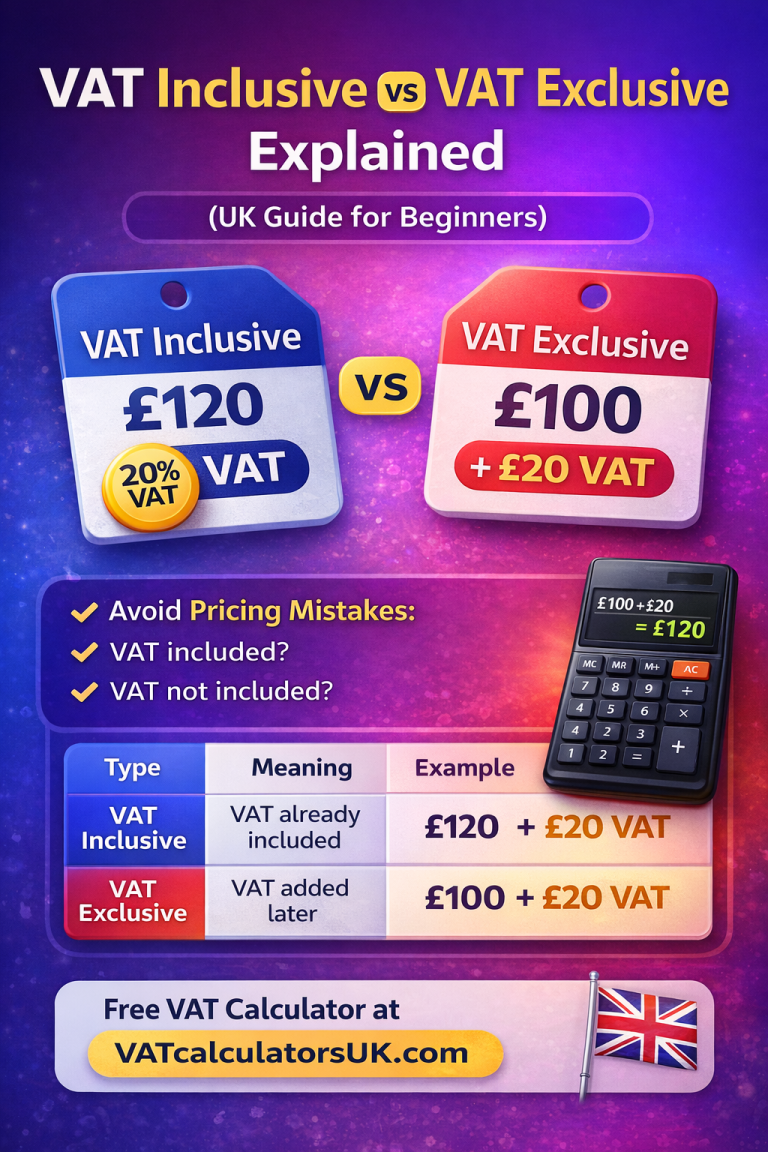
In this example, the VAT amount is calculated by multiplying the product price by the VAT rate, which means £100 multiplied by 20% equals £20 VAT. The final price including VAT becomes £120, which is the amount charged to the customer on the invoice.
Common Mistakes to Avoid During VAT Registration
Even though VAT registration follows clear steps, many businesses still make small mistakes that cause delays, penalties, or additional checks from HMRC. Understanding these mistakes early helps prevent unnecessary problems and keeps the registration process smooth.
One common mistake is providing incorrect turnover figures because inaccurate numbers can lead to rejection or further investigation by HMRC. Keeping proper sales records and reviewing turnover figures carefully helps avoid this situation and supports accurate reporting.
Another mistake involves choosing the wrong VAT scheme without understanding its impact on cash flow and daily operations. Businesses should review their financial patterns carefully and compare available VAT schemes before making this decision.
Some businesses also forget to update invoices after receiving their VAT number, which creates confusion during audits and customer transactions. Regularly reviewing accounting practices and invoice formats helps maintain compliance and avoid costly corrections later.
VAT Registration Costs UK
Many new business owners wonder whether VAT registration requires payment because they often assume that official registration involves additional fees or hidden charges. Understanding the cost structure helps remove confusion and allows businesses to plan their finances with confidence.
In most cases, registering for VAT in the UK is free when completed through the official HMRC online portal, which means businesses can apply without paying any direct registration fee. However, businesses may incur costs if they hire an accountant or consultant to complete the process on their behalf.
Below is a simple cost overview showing the most common expenses related to VAT registration so that businesses can understand possible costs in advance.
VAT Registration Cost Table
| Service | Cost |
|---|---|
| VAT registration through HMRC | Free |
| Accountant service (optional) | £50–£300 |
| VAT software subscription | £10–£50 per month |
Understanding these costs helps businesses plan their finances properly and avoid unexpected expenses that could affect their budgeting. Many businesses compare service options before choosing whether to complete registration themselves or hire professional assistance.
When Must You Register for VAT UK
Some businesses delay VAT registration because they are unsure about the exact moment when registration becomes mandatory and legally required by HMRC. Understanding the legal requirement clearly helps prevent penalties and keeps your business compliant with VAT rules.
You must register for VAT when your taxable turnover exceeds the VAT threshold within any rolling 12-month period, even if the increase happens gradually over time. This rule applies as soon as your sales pass the threshold limit, which means action must be taken without delay.
Businesses should monitor monthly sales and compare them with the official VAT threshold because early tracking prevents sudden surprises and reduces the risk of late registration. Many business owners create monthly reports to review their sales progress and stay prepared for VAT obligations.
When Must You Register for VAT UK
Some businesses delay VAT registration because they are unsure about the exact moment when registration becomes mandatory and legally required by HMRC. Understanding the legal requirement clearly helps prevent penalties and keeps your business compliant with VAT rules.
You must register for VAT when your taxable turnover exceeds the VAT threshold within any rolling 12-month period, even if the increase happens gradually over time. This rule applies as soon as your sales pass the threshold limit, which means action must be taken without delay.
Businesses should monitor monthly sales and compare them with the official VAT threshold because early tracking prevents sudden surprises and reduces the risk of late registration. Many business owners create monthly reports to review their sales progress and stay prepared for VAT obligations.
VAT Deregistration Overview
In some cases, businesses may need to cancel VAT registration because their turnover falls below the required threshold or their business activities change over time. This process is known as VAT deregistration and must be completed following official HMRC rules.
Understanding deregistration rules helps businesses manage changes in size and operations more effectively and avoid unnecessary reporting requirements. If your turnover decreases significantly, applying for deregistration may reduce administrative work and simplify your financial processes.
However, businesses must follow official procedures before stopping VAT charges because sudden removal without approval from HMRC can lead to compliance issues and possible penalties. Planning the deregistration process carefully helps ensure a smooth transition and prevents future complications.
Practical Tips for Smooth VAT Registration
Learning from real experiences helps simplify the VAT registration process because practical advice often prevents common mistakes that delay approval. Following a structured approach reduces confusion and ensures better outcomes during each stage of registration.
Below are useful tips that help businesses complete VAT registration smoothly and maintain accuracy throughout the process.
VAT Registration Tips Table
| Tip | Why It Helps |
|---|---|
| Track turnover monthly | Prevents late registration |
| Keep documents ready | Reduces delays |
| Review details carefully | Avoids application errors |
| Use VAT calculator tools | Improves accuracy |
| Maintain digital records | Simplifies VAT returns |
These small habits create strong financial discipline and make VAT management easier over time because consistent record keeping supports accurate VAT reporting. Businesses that follow these tips regularly often complete registration faster and face fewer compliance issues later.
FAQ — How to Register for VAT UK
How do I register for VAT UK online
You can register for VAT through the HMRC online services portal by creating an account, entering your business details, and submitting the registration form carefully. Once approved, HMRC issues your VAT number and confirmation letter, which allows you to start charging VAT legally.
How long does VAT registration take UK
VAT registration usually takes between two to four weeks, depending on the accuracy of information provided and the workload of HMRC during processing. If all details are correct and complete, the approval process usually finishes without delays.
Can I register for VAT before reaching the threshold
Yes, businesses can register voluntarily before reaching the VAT threshold if they want to reclaim VAT on expenses or improve their professional image when working with larger companies.
What documents are required for VAT registration UK
Common documents include business details, turnover records, bank information, and identification details such as National Insurance numbers or company registration numbers required by HMRC.
Do I need a VAT calculator after registration
Yes, using a VAT Calculator UK helps calculate VAT amounts accurately and reduces the risk of mistakes when preparing invoices and VAT returns. Many businesses use VAT calculators daily to manage sales and tax reporting.
What happens if I register for VAT late
If you register for VAT late after crossing the VAT threshold, HMRC may charge penalties and interest on unpaid VAT amounts. Registering on time helps avoid extra costs and keeps your business compliant with VAT rules.
Can I cancel VAT registration later
Yes, businesses can apply for VAT deregistration if their turnover falls below the required threshold or if they stop trading. Approval from HMRC is required before stopping VAT charges.
What VAT rate should I use in the UK
The standard VAT rate in the UK is usually 20%, but some goods and services may use reduced or zero rates depending on their category. Businesses should check the correct VAT rate before issuing invoices.
Do small businesses need VAT registration
Small businesses only need VAT registration if their taxable turnover exceeds the VAT threshold, but voluntary registration is also allowed for businesses that want to reclaim VAT on purchases.
How do I check my VAT registration status
You can check your VAT registration status through your HMRC online account, where updates about approval and VAT number issuance are provided during processing.
Conclusion
Registering for VAT in the UK may feel overwhelming at first, but understanding each step clearly makes the process much easier to manage from start to finish. When you follow the correct sequence, prepare your documents in advance, and track your turnover regularly, VAT registration becomes a smooth and predictable task for growing businesses.
Using reliable tools such as a VAT Calculator helps maintain accuracy after registration and ensures that VAT calculations remain correct during invoicing and reporting to HMRC. Over time, strong record keeping and careful planning create confidence and help businesses stay compliant with VAT rules and financial requirements.
By following the steps explained in this guide on How to Register for VAT UK, business owners can complete registration with confidence and build a strong foundation for future growth. Staying organized, monitoring turnover, and reviewing VAT records regularly will help maintain compliance and support long-term business success.