How to File a VAT Return UK – Step-by-Step Guide for Beginners (2026)
How to File a VAT Return UK – Step-by-Step Guide for Beginners (2026)
The first time HMRC asks for a VAT return, most business owners worry that one wrong figure will mean paying too much tax or getting a penalty. The process actually follows the same simple pattern every quarter, so once you understand how to file a VAT return, UK rules stop feeling confusing. This guide shows how to file a VAT return UK businesses use today, covering the software, the nine boxes, deadlines and penalties with real £ examples.
What Is a VAT Return?
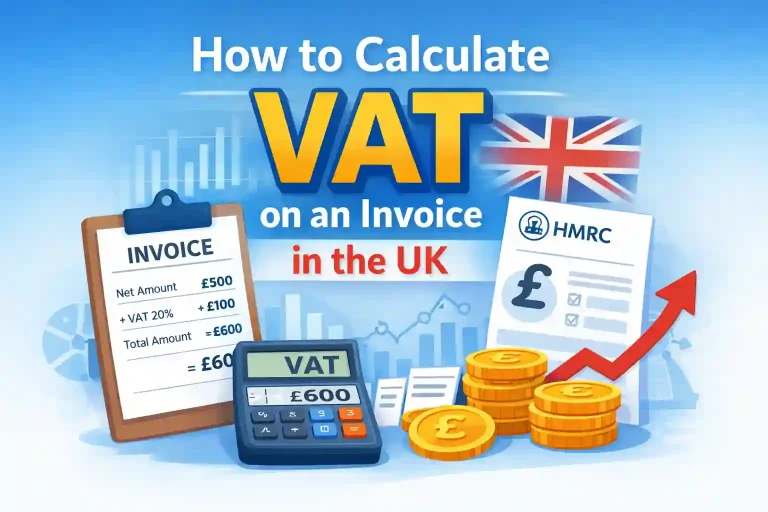
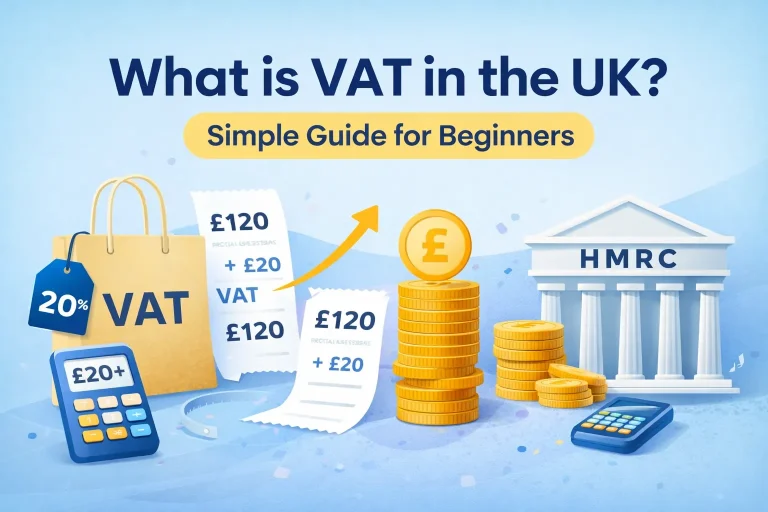
A VAT return is a digital form that tells HMRC the VAT you charged customers, called output VAT, and the VAT you paid on business costs, called input VAT. The difference decides whether you pay HMRC or get money back, as our guide on what VAT is in the UK explains.
Who Needs to File a VAT Return?
Every VAT-registered business must file for each accounting period, even if it registered voluntarily below the VAT threshold. You must still file when you have nothing to report, which is called a nil VAT return, and a late one still earns a penalty point.
When Is Your VAT Return Deadline?
Your VAT return deadline falls 1 calendar month and 7 days after your accounting period ends, and your payment must reach HMRC by that same date, even on a weekend or bank holiday.
| Quarter ends | Return and payment due |
| 31 March 2026 | 7 May 2026 |
| 30 June 2026 | 7 August 2026 |
| 30 September 2026 | 7 November 2026 |
| 31 December 2026 | 7 February 2027 |
Check your own dates in your VAT online account.
What You Need Before You File
Before you look at how to file a VAT return, UK business owners need four things ready:
- Your VAT registration number
- Your Government Gateway ID, plus an authenticator app or device
- MTD-compatible software, or bridging software for a spreadsheet
- Records with a valid VAT invoice for each cost you reclaim
The old HMRC website form closed in November 2022, and Making Tax Digital now covers every VAT-registered business unless HMRC agrees an exemption, as VAT Notice 700/22 explains.
How to File a VAT Return Step-by-Step
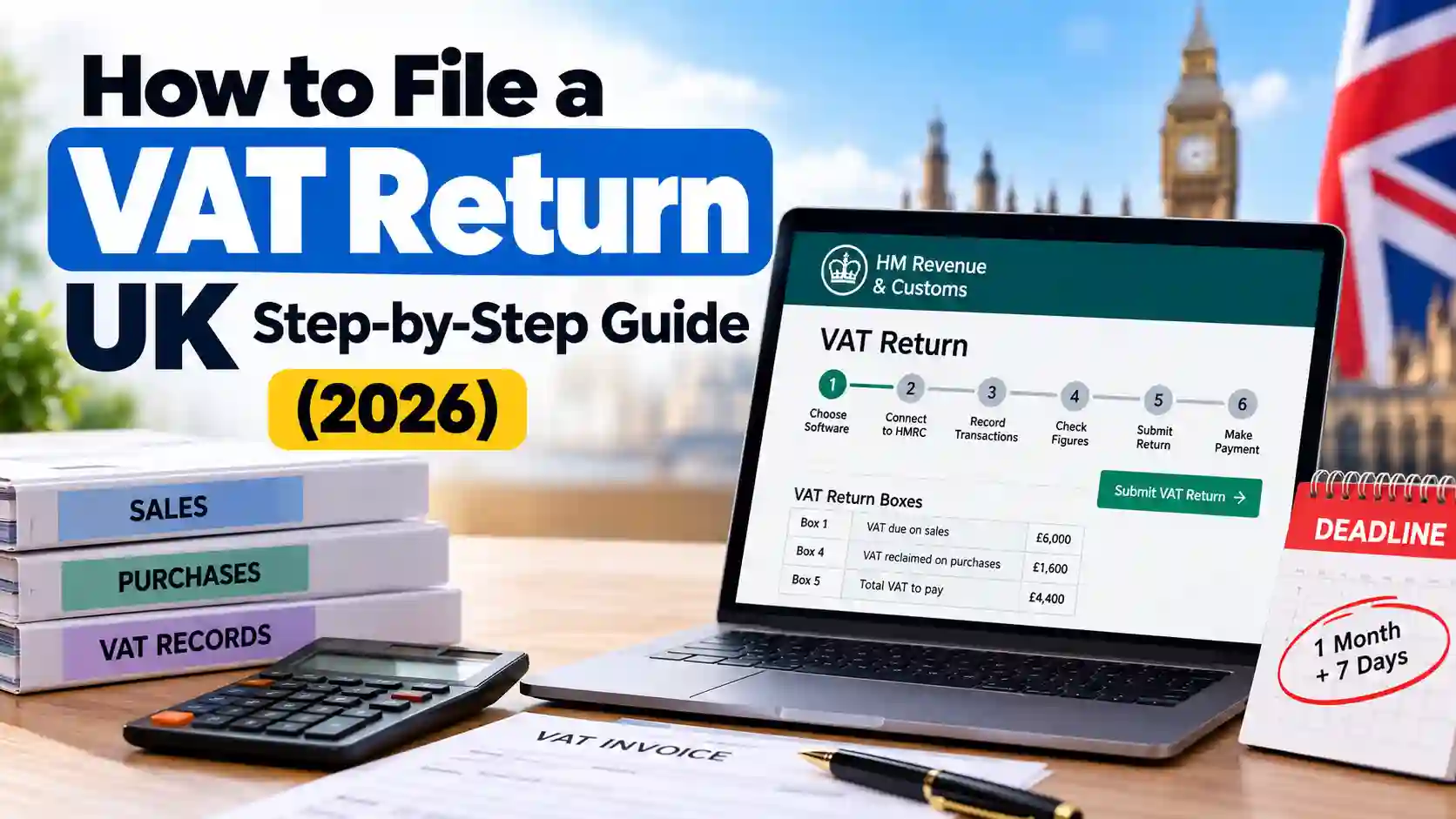
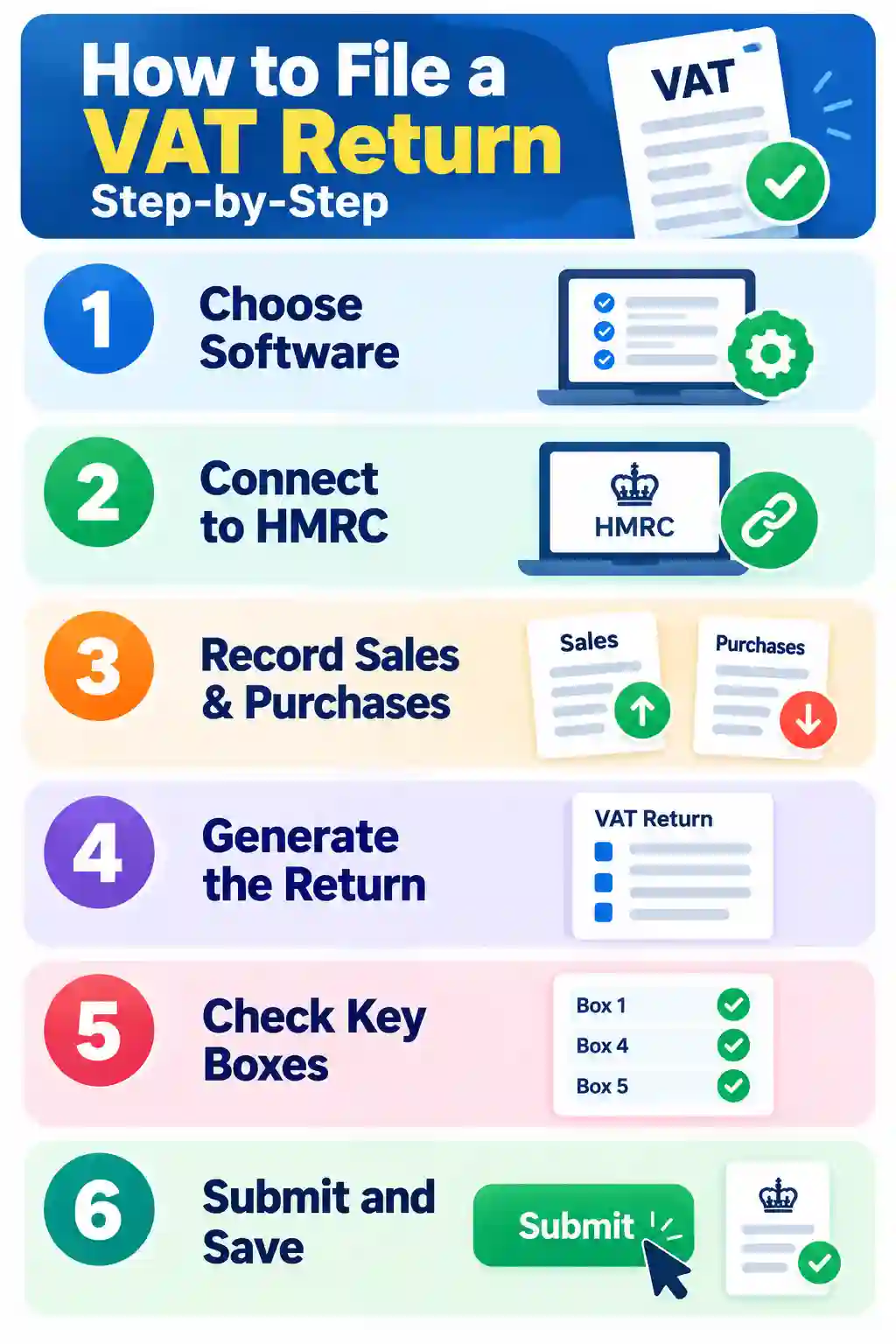
Learning how to do a VAT return is easier when you follow the same six steps each quarter.
- Choose MTD-compatible software from HMRC’s list on GOV.UK, which includes free options.
- Connect it to HMRC using your Government Gateway details.
- Record every sale and purchase digitally during the quarter.
- Generate the return, and the software fills in the nine boxes for you.
- Check Boxes 1, 4 and 5 against your invoices and bank statements.
- Submit the return and save the confirmation reference from HMRC.
These six steps are exactly how to file a VAT return. UK accountants follow the same steps, so nothing changes if you hire one later.
VAT Return Boxes 1 to 9 Explained
Your software fills in the VAT return boxes for you, but understanding them is the part of how to file a VAT return UK beginners find hardest. VAT Notice 700/12 gives the official meaning of each one.
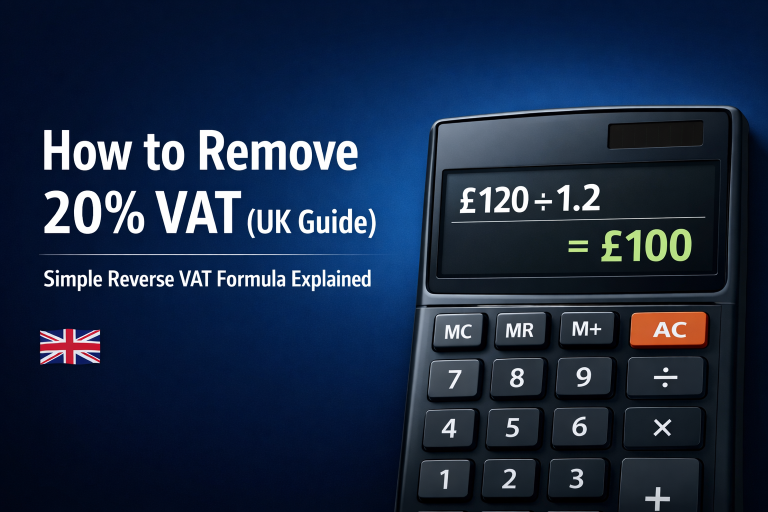
For example, £30,000 of sales and £8,000 of purchases before 20% VAT gives £6,000 in Boxes 1 and 3, £1,600 in Box 4 and £4,400 to pay in Box 5. Our free VAT calculator checks figures like these with its Add VAT and Remove VAT buttons.
Filing Your First VAT Return
Your first VAT return is your first real test of how to file a VAT return. UK registrations can start on any date, so HMRC may set an unusual first period worth confirming online. You can also reclaim VAT on goods you still hold that were bought within 4 years before registering, and on services from the 6 months before. An accountant’s review is money well spent, and our VAT registration guide helps if you have not registered yet.
How to Pay Your VAT Bill or Get a Refund
You can pay by Direct Debit or bank transfer, but a BACS transfer takes 3 working days to reach HMRC. Refunds usually arrive within about 10 working days, but only into bank details saved in your VAT online account; otherwise HMRC sends a cheque. If paying in full is hard, our Help to Pay VAT page explains your options.
What Happens If You File or Pay Late?
Late penalties worry many people learning how to file a VAT return. UK tax law treats late filing and late payment as two separate charges.
Late Filing: Penalty Points
Each late return earns one penalty point, nil returns included, and once you hit your threshold, HMRC charges £200 for each further one.
| Filing frequency | Points threshold | On-time period to reset |
| Annual | 2 | 24 months |
| Quarterly | 4 | 12 months |
| Monthly | 5 | 6 months |
Late Payment: Penalties and Interest
- Days 1 to 15: no penalty
- Days 16 to 30: 3% of the VAT owed on day 15
- Day 31 onwards: another 3% of the VAT owed on day 30, plus 10% a year charged daily
In HMRC’s own example, £15,000 paid 51 days late costs £986.30 in penalties. Interest also runs from day one at the Bank of England base rate plus 4% (7.75% from 9 January 2026, so check GOV.UK for the latest rate), and an early Time to Pay arrangement can reduce these late payment penalties.
How to Correct a VAT Return Error
You cannot edit a submitted return, and how you correct VAT return error amounts depends on their size. A net error of up to £10,000, or up to £50,000 if it is no more than 1% of Box 6, goes on your next return. Bigger or deliberate errors go to HMRC online or in writing, because form VAT652 was withdrawn on 5 September 2025.
Common VAT Return Mistakes to Avoid
- Reclaiming VAT without a valid VAT invoice
- Forgetting a nil return in a quiet quarter
- Reclaiming VAT on client entertainment
- Mixing up VAT inclusive and exclusive prices
- Paying on deadline day by bank transfer
Frequently Asked Questions
How long must I keep VAT records?
You must keep your VAT records for at least 6 years.
Can I file without an accountant?
Yes, many small businesses file their own returns using simple software.
Can I file monthly instead of quarterly?
Yes, businesses that usually get refunds can ask HMRC for monthly returns.
Final Thoughts
Filing on time comes down to three habits: keep digital records, check Boxes 1, 4 and 5, and pay a few days early. Now that you know how to file a VAT return, UK deadlines should feel far less worrying, and the official GOV.UK guide covers unusual cases.